Calopogonium mucunoides Desv.
| Etymology | Genus | Beautiful beard; perhaps referring to the hairy stem |
|---|---|---|
| Species | Probably resembling species within the Mucuna genus. | |
| Family | Fabaceae | |
| Synonyms | Calopogonium brachycarpum Hemsl., Stenolobium brachycarpum Benth. | |
| Common Names | Calopo, Wild Ground Nut | |
| Status | Exotic: Naturalised | |
| Form | Herbaeous creeper or climber | |
| Native Distribution | Tropical America | |
Diagnostics
A common creeper in scrublands. The stem and fruits are noticeably hairy. There are a few other common trifoliate scrubland creepers like Centrosema pubescens and Centrosema molle, but Calopogonium mucunoides has broader leaflets and distinct depressed secondary and teritary veins.
Interesting Facts
The Calopo is widely distributed as a cover crop. Like many members within the family Fabaceae, they are capable of hosting bacteria within their root nodules. These bacteria help to manufacture nitrogen for the plant and in turn also enrich the soil with the nutrient.
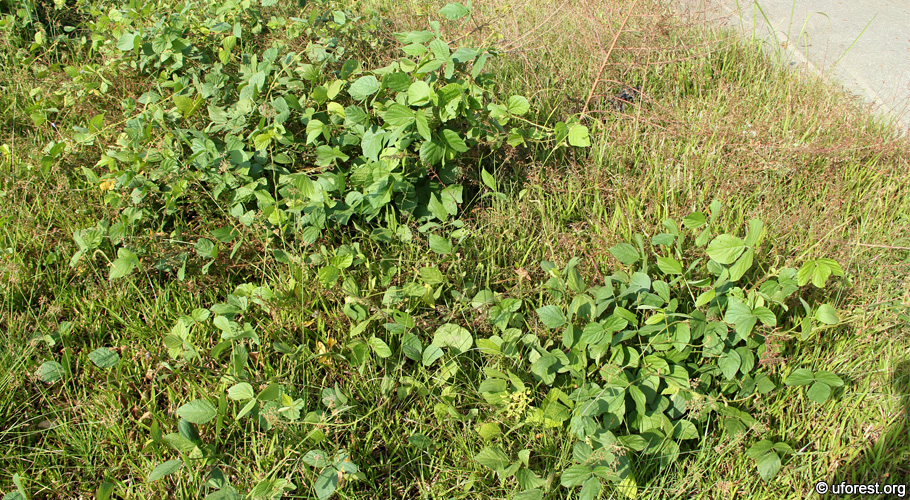
Calopogonium mucunoides creeping over a wasteland in Sengkang.
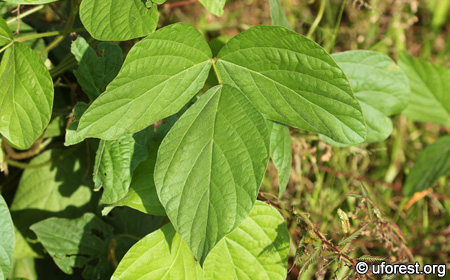
The trifoliate leaf.
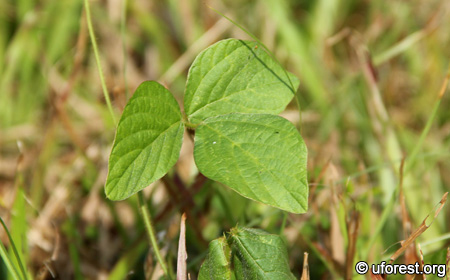
The two basal leaflets typically tilt vertically.
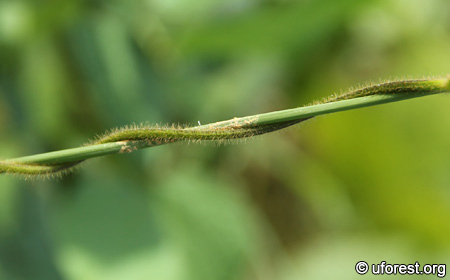
The stem is twining and hairy.

The flowers are about 1 cm wide.
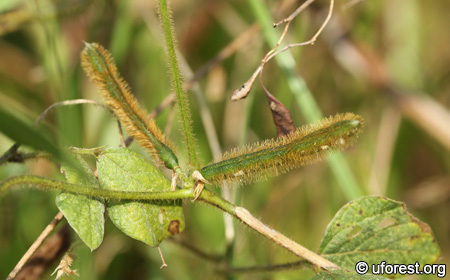
Fruit pods are linear and very hairy.