Cassia fistula L.
| Etymology | Genus | From the name Kasia, named by an ancient Greek botanist, Pedanius Dioscorides |
|---|---|---|
| Species | Tube-like, in reference to its fruits | |
| Family | Fabaceae | |
| Synonyms | - | |
| Common Names | Golden Shower | |
| Status | Exotic: Casual | |
| Form | Tree | |
| Native Distribution | Tropical Asia, including India, Sri Lanka, and Myanmar | |
Diagnostics
The foliage is rather sparse and has a mild droopy habit. The paripinnate leaves are the most distinctive. The leaflets are ovate, large and oppositely arranged.
Interesting Facts
Cassia fistula has an open crown, and deciduous. Not something of a favourite for a shade tree but it is magnificent for its flowering. True to its common name, the tree produces a shower of golden-yellow flowers that hangs downs from the branches. The fruits are cylindrical and extremely elongated and turn brown when ripe, but do not split. The insides of the fruit contain a brown sticky pulp that is a known remedy for constipation (Rao & Wee, 1989).
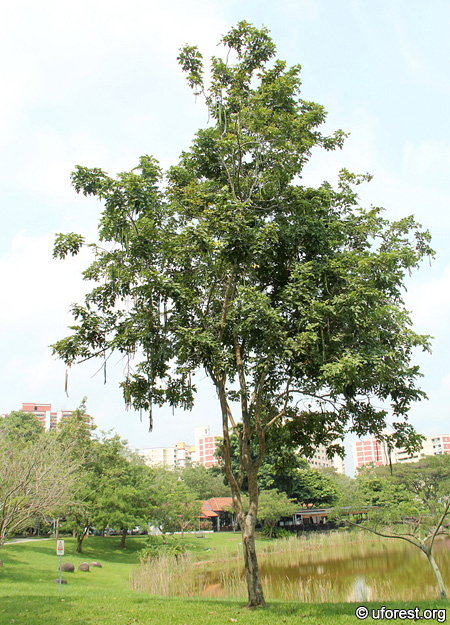
Form of the tree. Note the fruits hanging down.
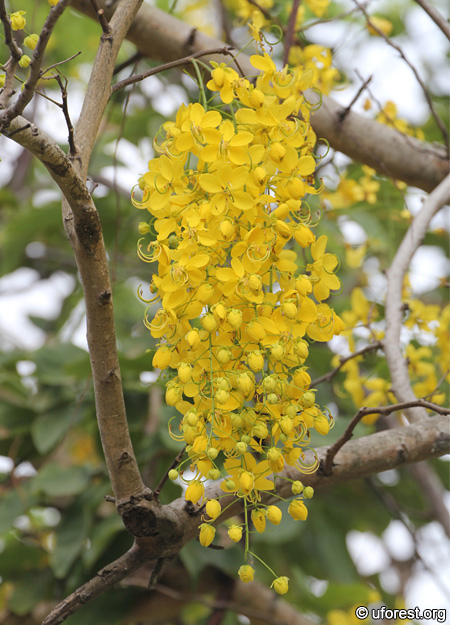
The flowers come in a shower of gold.
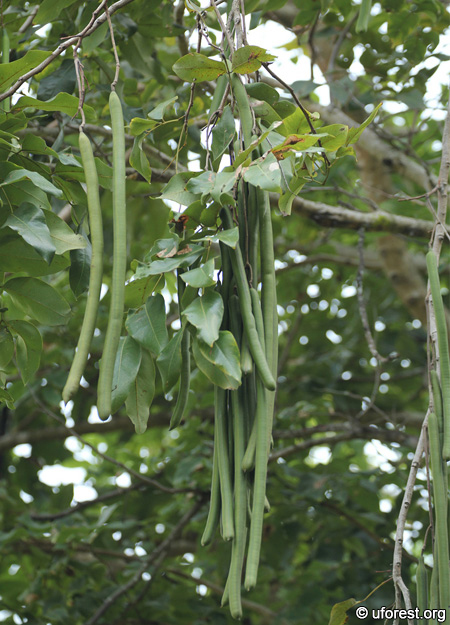
Elongated fruits suspended from the tree.

Pinnate leaves. Each leaflet is large and probably largest of the cassia here.
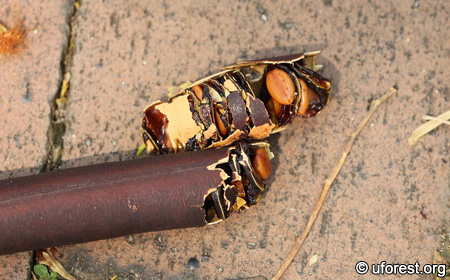
A smashed fruit, revealing the seeds covered with brown sticky pulp.