Gymnanthemum amygdalinum (Delile) Sch.Bip.
| Etymology | Genus | From Greek, naked flower |
|---|---|---|
| Species | Almond-like | |
| Family | Asteraceae | |
| Synonyms | Vernonia amygdalina Delile | |
| Common Names | South African Leaf, Bitter Leaf, 南非叶 | |
| Status | Exotic: Cultivated Only | |
| Form | Shrub | |
| Native Distribution | Tropical Africa | |
Diagnostics
This is a sun-loving, upright shrub is commonly cultivated privately for their medicinal properties. The thin leaves are spirally arranged. Each leaf have a clear light green mid-vein and the tertiary veins are very prominent on the underside. The leaf margin is slightly serrated. The trunk and branches are covered with lenticels.
Interesting Facts
The South African Leaf is commonly cultivated as a herbal remedy, including lowering blood cholesterol, blood pressure and uric acid (Tan, 2016). It is also used to treat parasitic infections in the gastrointestinal tract. Interestingly, chimpanzees have been observed to use this treatment by chewing the young shoots and sucking the bitter juice (Huffman & Seifu, 1989). It is also commonly used in Uganda, Africa as a treatment for malaria (Tugume et al., 2016).
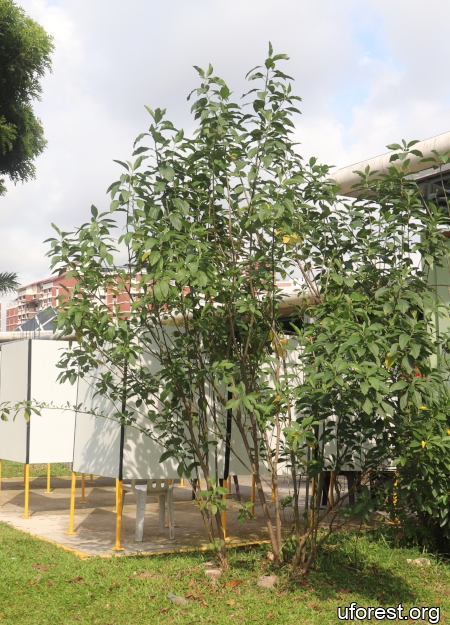
Cultivated stand at Hougang (2025).
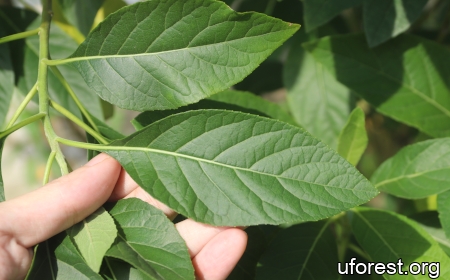
Young leaf.
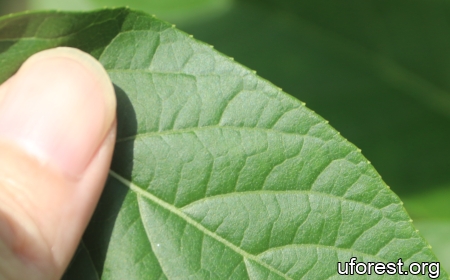
Serrated margin.
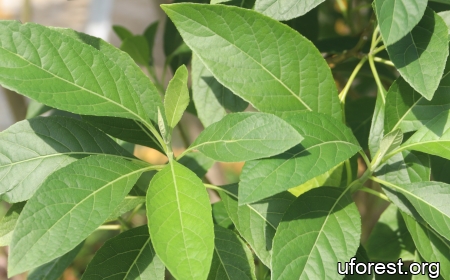
Spiral arrangement.
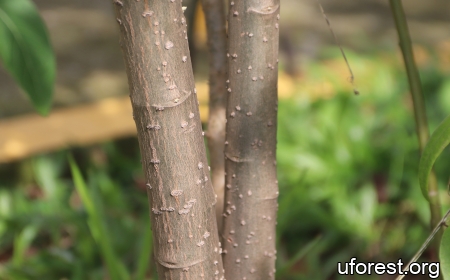
Lenticels.
References
Tan (2016) Uncle Tan Herbs. https://uncletanherbs.info/ailments. Accessed on 19-Aug-2025.
Huffman MA, Seifu M (1989) Observations on the illness and consumption of a possibly medicinal plant Vernonia amygdalina (DEL.), by a wild chimpanzee in the Mahale Mountains National Park, Tanzania. Primates, 30: 51–63.
Tugume P, Kakudidi EK, Buyi M, Namaalwa J, Kamatenesi M, Mucunguzi P, Kalema J (2016) Ethnobotanical survey of medicinal plant species used by communities around Mabira Central Forest Reserve, Uganda. Journal of Ethnobiology and Ethnomedicine, 12(1).