Solanum melongena L.
| Etymology | Genus | Solace; referring to the narcotic properties of certain species |
|---|---|---|
| Species | From Greek melongénē, meaning “mad apple” or “eggplant.” | |
| Family | Solanaceae | |
| Synonyms | Solanum oviferum Nocca, Solanum ovigerum Dunal | |
| Common Names | Eggplant, Brinjal, Baigan, Aubergine | |
| Status | Exotic: Cultivated Only | |
| Form | Herb | |
| Native Distribution | West Indian Ocean, Tropical & Subtropical Asia | |
Diagnostics
A herb that is cultivated for its edible fruit. It has hairy leaves that are slightly lobed. The fruit is purple and is either bulbous or elongated.
Interesting Facts
The edible fruit is spongy and contains 92% water (United States Department of Agriculture, n.d.). The purple colouration of the eggplant's skin is due to nasunin, an anthocyanin (Noda et al., 2000).
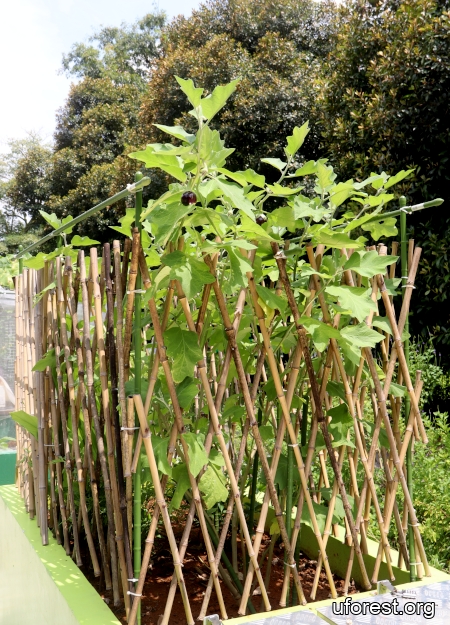
Within a community garden in Punggol Park (2025).
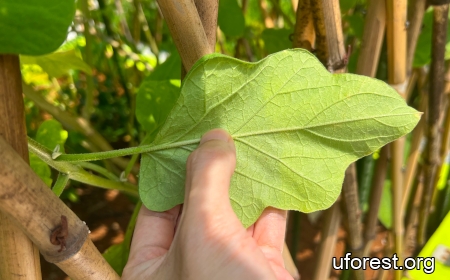
Leaf underside.
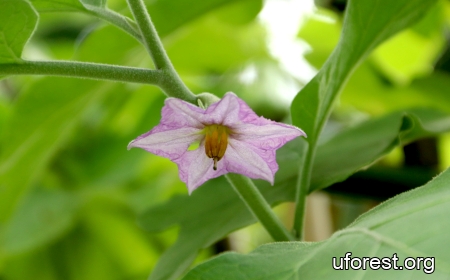
Flower.
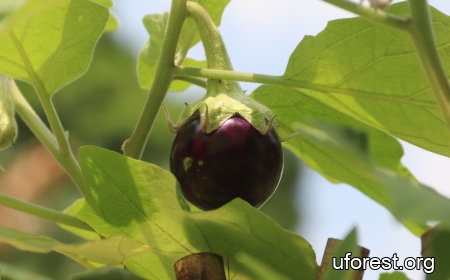
Bulbous fruit form.
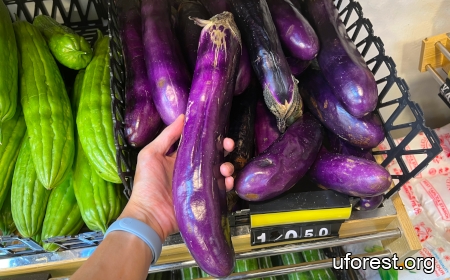
Elongated fruit form.
References
United States Department of Agriculture. (n.d.). FoodData Central: Food details (FDC ID 169228) Nutrients, https://fdc.nal.usda.gov/food-details/169228/nutrients. Accessed 13-Oct-2025.
Noda, Y., Kneyuki, T., Igarashi, K., Mori, A., & Packer, L. (2000). Antioxidant activity of nasunin, an anthocyanin in eggplant peels. Toxicology, 148(2–3), 119–123.