Tamarindus indica L.
| Etymology | Genus | From the Arabic name Tamarhindi |
|---|---|---|
| Species | after India | |
| Family | Fabaceae | |
| Synonyms | Tamarindus occidentalis Gaertn., Tamarindus officinalis Hook. | |
| Common Names | Tamarind, Asam, Asam Jawa | |
| Status | Exotic: Casual | |
| Form | Tree | |
| Native Distribution | Tropical east Africa and west Asia | |
Diagnostics
Tamarindus indica is a tree sparingly cultivated in our urban landscape. The scaly trunk is light brown or grey. The branching is somewhat straggly and droopy, which gives the foliage an untidy appearance (at least to me). The fruits are unmistakable and immediately diagnostic.
Interesting Facts
The pulp derived from the fruits of the Tamarind is edible and used as a souring ingredient in cooking (Wee, 2003). Tartaric acid is responsible for the sour taste, and is richer in the unripe fruit pods.
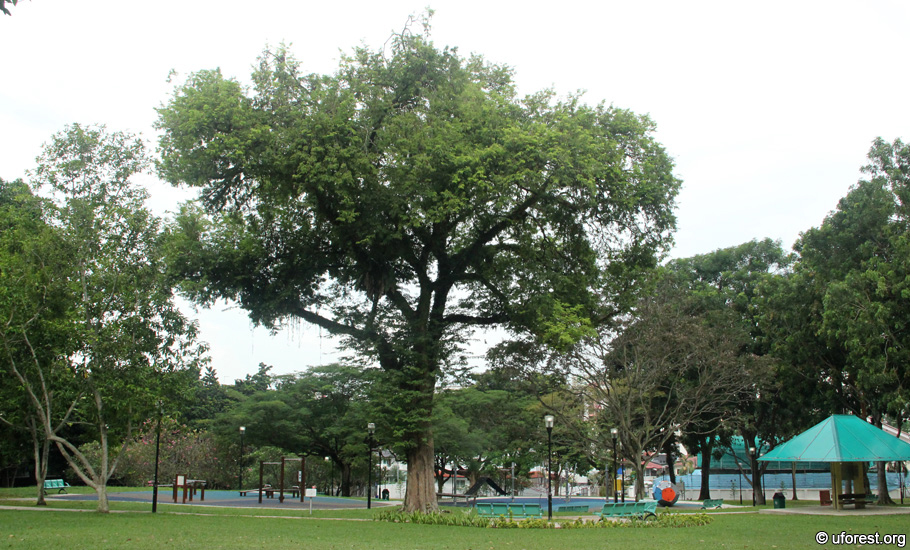
A Tamarind designated as a heritage tree in Surin Avenue Neighbourhood Park.
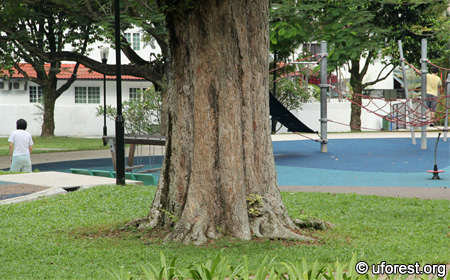
Trunk.
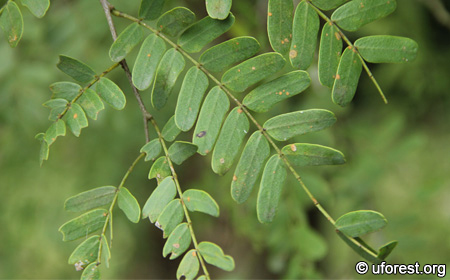
Leaflets.

Foliage. Notice the two sides of the leaflets are erected upwards.
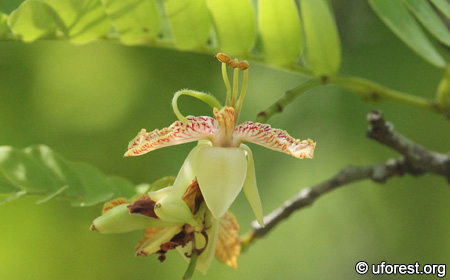
Flower.
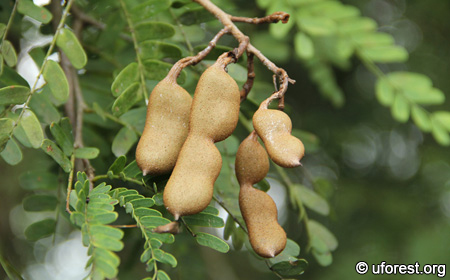
Fruit pods.
References
Wee YC. (2003) Tropical Trees and Shrubs: A Selection for Urban Planting. Sun Tree Publishing, USA. 392 pp.
Siyang ·
2014-08-10 / Modified: 2017-12-25