Vitex pinnata L.
| Etymology | Genus | An ancient name used by Pliny possibly for the Chaste Tree, Vitex agnus-castus |
|---|---|---|
| Species | Pinnate; reference unknown as the leaf is palmately compound | |
| Family | Lamiaceae | |
| Synonyms | Vitex arborea Roxb., Vitex digitata Wight ex Steud., Vitex pubescens Vahl | |
| Common Names | Malayan Teak, Leban | |
| Status | Native: Least Concern | |
| Form | Tree | |
| Native Distribution | Bangladesh, India, Indochina, Indonesia, Peinsular Malaysia, Singapore, and Philippines | |
Diagnostics
Vitex pinnata is a very common tree in young secondary forests. The leaves are very distinctive, being palmately compound with sessile leaflets. The leaflets normally comes in 5 with 2 smaller leaflets at the back. The bark is fissured. Corner (1997) stated that the leaves are frequently "disfigured by galls or perforated by insects", which also seems to be the case from my observations.
Interesting Facts
The berries of the Malayan Teak is attractive to birds. In moderate shade, it can grow up to impressive heights of about 24m. This together with its shape and branching resembles the Teak tree, hence its common name (Corner, 1997).
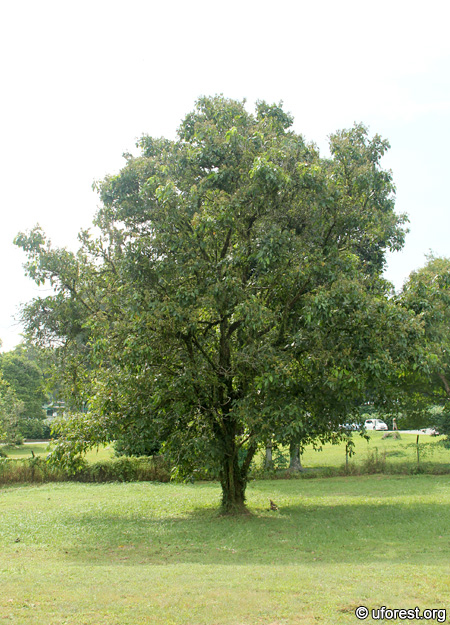
Form of the Malayan Teak in Bidadari Cemetery.

Palmately compound leaf with 5 leaflets.
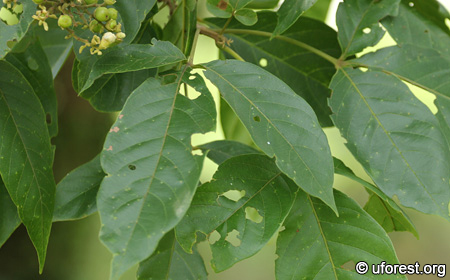
Leaf with 3 leaflets.
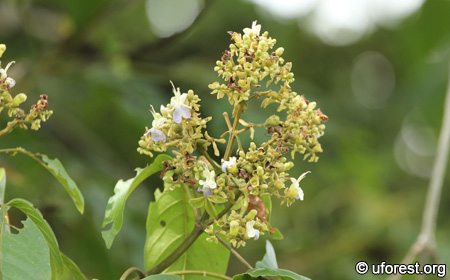
Inflorescence.
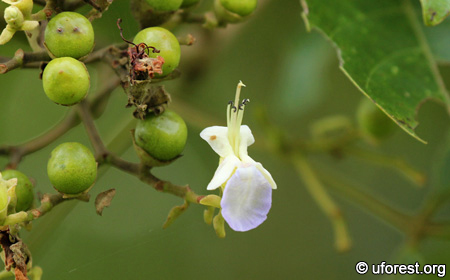
Flower close-up.
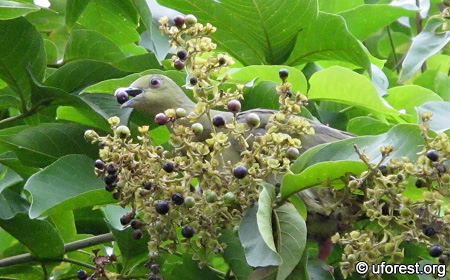
Pink-neck Green Pigeon eating the ripe fruits.